Title: Vertical Stock Footage for TikTok and Instagram Reels: A Smart Choice for Modern Content Creators


Short-form video content has become one of the most powerful tools for reaching audiences online. Platforms like TikTok and Instagram Reels prioritize vertical videos, making them the preferred format for creators, influencers, and businesses. As the demand for engaging short videos continues to grow, vertical stock footage has become an essential resource for creators who want to produce professional content quickly and efficiently.

Why Vertical Footage Matters for Short-Form Content

Unlike traditional horizontal videos designed for television or YouTube, TikTok and Instagram Reels are optimized for mobile viewing. Vertical footage fits perfectly on smartphone screens, providing a more immersive and engaging viewing experience.

Using vertical stock footage allows creators to produce content that looks natural and platform-friendly without the need for cropping or adjusting horizontal clips. This ensures that important visual elements remain visible and that the video maintains its intended composition.

For creators producing frequent content, combining vertical video clips with other visual assets such as Cheap Stock Photos can help build visually dynamic posts that capture audience attention quickly.

Benefits of Using Vertical Stock Footage

One of the biggest advantages of vertical stock footage is efficiency. Instead of filming every scene yourself, stock libraries provide ready-to-use clips that can be integrated directly into your videos. This saves both time and production costs.

Another key benefit is access to professional-quality visuals. Many stock footage platforms offer high-resolution vertical clips filmed by experienced videographers. These clips can instantly enhance the quality of your content, making your videos appear more polished and professional.

Vertical stock footage is also highly versatile. Creators can use it for educational content, marketing campaigns, lifestyle videos, motivational reels, and more. By mixing different clips, creators can build compelling narratives that keep viewers engaged from start to finish.

Types of Vertical Stock Footage Available

Modern stock footage platforms now offer large collections of vertical videos designed specifically for social media platforms. These clips cover a wide variety of topics and industries.

Some of the most common categories include:

Lifestyle and daily activities
Travel and adventure scenes
Fitness and wellness content
Business and entrepreneurship visuals
Technology and innovation clips
Urban environments and city life

Creators often combine these clips with design elements, text overlays, and Cheap Stock Photos to produce visually rich short-form content that stands out on crowded social media feeds.

Tips for Choosing the Right Vertical Clips

Selecting the right stock footage is essential for maintaining a consistent and professional look. First, make sure the clip is formatted in a vertical aspect ratio, typically 9:16, which is ideal for TikTok and Instagram Reels.

Resolution is another important factor. High-quality clips in 1080p or 4K resolution ensure that your videos look sharp and clear on modern mobile devices.

It is also helpful to choose footage that aligns with your brand style or content theme. Consistent colors, lighting, and visual tone help create a recognizable identity across your social media videos.

The Future of Vertical Content Creation

As mobile-first platforms continue to dominate social media, vertical video will remain one of the most important formats for digital creators. Businesses, influencers, and marketers are increasingly investing in short-form content to reach larger audiences and boost engagement.

By using vertical stock footage alongside other resources like Cheap Stock Photos, creators can produce high-quality content without needing a full production team. This approach allows small creators and brands to compete with larger productions while maintaining a steady flow of engaging videos.

For anyone looking to grow their presence on TikTok or Instagram Reels, vertical stock footage is a powerful tool that makes professional content creation faster, easier, and more accessible.

10 Clear Signs Your Photos Need Professional Editing: A Complete Guide

We’ve all been there – that perfect moment captured on camera only to discover later that someone blinked, photobombed or worse yet your finger partially covered the lens. These photo fails happen to the best of us and they’re usually good for a laugh. But when these pics are meant for something important like your dating profile or professional portfolio they need some serious fixing.

Let’s face it editing photos isn’t just about making ourselves look Instagram-worthy anymore. From removing that random stranger in the background of your proposal pic to fixing the weird green tint that made everyone look like aliens at your sister’s wedding we’ve got quite the collection of photo mishaps that desperately need a date with Photoshop. Don’t worry though – we’ll show you how even the most cringe-worthy shots can be salvaged with the right editing tricks.

Common Signs Your Photos Need Professional Editing

Let’s face it – even the most Instagram-worthy moments can turn into digital disasters. Here’s how to spot the telltale signs that your photos need editing intervention.

Poor Lighting and Exposure Issues

Dark shadows lurking in all the wrong places? That’s your photo crying for help! Photos that need editing often show these exposure red flags:

  • Faces appearing too dark while backgrounds are blown out
  • Important details lost in shadowy areas
  • Harsh midday sun creating unflattering highlights
  • Indoor shots with that dreaded yellow cast from artificial lighting
  • Backlit subjects looking like mysterious silhouettes

Color Balance Problems

When your whites aren’t white and your blues look green, it’s time for some color correction magic:

  • Skin tones resembling either oompa loompas or zombies
  • Indoor photos with an obvious orange or blue tint
  • Mixed lighting creating a rainbow effect across the image
  • Faded or washed-out colors lacking vibrancy
  • Inconsistent white balance between series of photos

Distracting Background Elements

  • That random stranger picking their nose behind your perfect pose
  • Exit signs glowing like UFOs above formal group shots
  • Cluttered spaces competing for attention with the subject
  • Telephone poles appearing to sprout from people’s heads
  • Construction equipment photobombing your scenic landscape
Common Issue % of Amateur Photos Affected
Poor Exposure 65%
Color Issues 48%
Background Distractions 37%

Types of Photos That Typically Require Editing

Let’s explore the most common categories of photos that need editing to transform them from “oh no” to “oh wow” moments. These images often require specific editing techniques unique to their purpose and style.

Portrait Photography

Portrait photos typically need editing to handle common mishaps like red-eye, blemishes or that one stubborn hair standing straight up like it’s auditioning for a punk rock band. Professional headshots require attention to skin texture retouching while preserving natural features. Wedding photos need color correction to ensure the white dress doesn’t look like it took a swim in yellow paint. Here are specific editing needs:

  • Remove temporary skin imperfections (acne spots pimples cuts)
  • Adjust uneven lighting between faces in group shots
  • Soften harsh shadows under eyes chin neck
  • Fix closed eyes or awkward expressions
  • Balance exposure differences between indoor outdoor shots

Real Estate and Architecture Photos

Real estate photos need editing as much as that kitchen needs a renovation from 1975. These images require specialized editing to showcase spatial features accurately:

  • Correct perspective distortion in room angles
  • Balance window exposure with interior lighting
  • Remove unwanted reflections in mirrors windows
  • Enhance sky color for exterior shots
  • Clean up landscaping imperfections
  • Fix color casts from mixed lighting sources

Product Photography

  • Remove dust specks fingerprints smudges
  • Create pure white backgrounds for e-commerce
  • Correct product color accuracy
  • Enhance texture detail clarity
  • Fix reflection issues on shiny surfaces
  • Adjust shadows for 3D effect
Photo Type Common Editing Needs Success Rate After Editing
Portraits Skin retouching color correction 85%
Real Estate Exposure balancing perspective correction 78%
Product Background removal color accuracy 92%

Essential Photo Editing Techniques

Let’s dive into the core editing techniques that transform those cringe-worthy snapshots into frame-worthy masterpieces. These fundamental skills help salvage photos that need editing, turning those “what was I thinking?” moments into “wow, I look amazing!” results.

Basic Color Correction

Color correction rescues photos from looking like they were taken on another planet. Here’s how to fix those color catastrophes:

  • Adjust white balance to eliminate orange or blue tints that make people look like extras from Avatar
  • Fine-tune vibrance to enhance colors without making subjects look radioactive
  • Modify saturation to prevent that “help, I’m trapped in a cartoon” effect
  • Balance tint levels to fix those mysterious green or magenta casts
  • Apply selective color adjustments to specific areas like skin tones or sky

Exposure Adjustments

Exposure fixes bring subjects out of the shadows or back from the blinding light:

  • Recover highlight details in overexposed areas that look like mini explosions
  • Brighten shadows to reveal subjects hiding in dark corners
  • Adjust contrast to add depth without creating the dramatic soap opera effect
  • Fine-tune blacks to maintain rich dark tones without losing detail
  • Modify whites to create crisp bright areas that don’t look nuclear

Retouching and Spot Removal

  • Remove temporary blemishes that chose the worst day to appear
  • Erase dust spots that make photos look like they were taken in a sandstorm
  • Clean up stray hairs that defy gravity and common sense
  • Delete photobombers who thought they were being hilarious
  • Fix clothing wrinkles that make outfits look like they survived a tornado
Common Issue Success Rate Average Edit Time
Color Cast 92% 3-5 minutes
Exposure Problems 88% 4-7 minutes
Spot Removal 95% 2-4 minutes

When to Edit Photos Yourself vs Hire a Professional

Let’s face it – not every photo mishap requires a professional’s magic touch, but some definitely scream “Help!” louder than a cat caught in the rain. Here’s how to decide whether to tackle the edit yourself or call in the pros.

DIY-Friendly Editing Projects

Basic photo fixes are perfect for the DIY enthusiast with entry-level editing software:

  • Brightening underexposed images by adjusting exposure settings
  • Cropping out photobombers at the edge of frames
  • Correcting white balance to fix those orange-tinted indoor shots
  • Removing red-eye from flash photography
  • Adjusting contrast to make flat images pop
  • Straightening crooked horizons in landscape shots

Average editing time for DIY projects: 5-15 minutes

Success rate for beginners: 75%

Complex Editing Requirements

These editing challenges require professional expertise:

  • Removing multiple people from crowded tourist photos
  • Reconstructing missing parts of architectural elements
  • Creating composite images from multiple shots
  • Retouching professional headshots for corporate use
  • Color-correcting product photos for e-commerce consistency
  • Recovering severely overexposed or underexposed images
Project Type Success Rate Average Turnaround
Portrait Retouching 98% 24-48 hours
Product Photography 99% 12-24 hours
Real Estate Editing 95% 24-36 hours

Best Practices for Photo Editing

Photo editing transforms cringe-worthy snapshots into masterpieces with proper techniques and consistent workflows. Let’s explore the essential practices that’ll help you avoid turning your photos into digital disasters.

Maintaining Image Quality

Working with high-resolution files preserves detail during the editing process. Here’s how to maintain pristine image quality:

  • Save original files as RAW format to retain maximum editing flexibility
  • Create duplicate copies before editing to protect source material
  • Export final images at 300 DPI for print or 72 DPI for web display
  • Limit the number of adjustments to prevent artifacting
  • Use non-destructive editing tools like adjustment layers
  • Avoid repeatedly saving as JPG which degrades quality
File Format Best Use Case Max Resolution
RAW Professional editing Original sensor
PSD Working files No limit
JPG Web/sharing 12 megapixels

Creating Consistent Style

  • Design preset adjustment combinations for similar photos
  • Document color correction values for future reference
  • Maintain consistent crop ratios across photo series
  • Apply identical sharpening settings to related images
  • Use synchronized editing for batch processing
  • Save custom filters as reusable templates
Style Element Consistency Factor Time Saved
Color presets 85% matching 15 min/batch
Crop ratios 90% alignment 10 min/set
Filter templates 95% uniformity 20 min/collection

Conclusion

Let’s face it – we’ve all been there with those cringe-worthy photos that make us want to hide under a rock. But now we know there’s hope! Whether it’s that awkward family photo where Uncle Bob decided to sneeze or that “perfect” selfie ruined by a stranger’s photobomb we can fix it.

Armed with the right tools and knowledge we’re ready to transform those photographic fails into social media wins. And if things get too complicated we know when to wave the white flag and call in the pros.

Remember folks: even the worst photo disasters can become masterpieces with a little editing magic. Now get out there and start turning those “yikes” into “likes”!


Categories Art

10 Best Sources for Cheap Stock Photos: A Complete Guide to Quality Images Under $10

Creating engaging visual content doesn’t have to break the bank. We know that finding high-quality stock photos at affordable prices can be challenging for bloggers businesses and content creators. That’s why we’ve explored the best sources for cheap stock photos that won’t compromise on quality.

Whether you’re working on a tight budget or simply looking to maximize your marketing dollars we’ll show you where to find professional-grade images at fraction of the cost. From subscription-based services to pay-per-download options there’s a solution for every need and budget. Let’s discover how to enhance your visual content while keeping your expenses in check.

What Are Stock Photos and Why Do You Need Them

Stock photos are professional photographs licensed for commercial use across various digital platforms including websites, social media posts, marketing materials or blog content. These pre-shot images come from photographers who sell their work through stock photography platforms.

Key characteristics of stock photos include:

  • High-resolution quality suitable for multiple formats
  • Professional editing with balanced composition
  • Legal clearance for commercial usage
  • Diverse subject matter from business to lifestyle
  • Immediate availability for download

Stock photos serve essential functions in content creation:

  1. Save Production Time
  • Eliminate photoshoot planning
  • Provide instant access to professional images
  • Enable quick content updates
  1. Reduce Costs
  • Avoid expensive photography equipment
  • Eliminate studio rental expenses
  • Cut professional photographer fees
  1. Maintain Visual Quality
  • Access professional-grade images
  • Ensure consistent image standards
  • Choose from multiple options
  1. Scale Content Creation
  • Build image libraries quickly
  • Source visuals for multiple projects
  • Match varied content themes
Usage Type Benefits of Stock Photos
Websites Faster page loading with optimized images
Social Media Multiple size options for different platforms
Marketing Professional look at fraction of custom photography cost
Blogs Regular content updates with fresh visuals

Our content requires quality visuals to engage audiences effectively. Stock photos provide a cost-effective solution to maintain professional standards while meeting demanding content schedules.

Top Websites for Affordable Stock Photography

Leading stock photo websites offer extensive collections of professional images at competitive prices. Each platform provides unique pricing models to accommodate different budgets and usage requirements.

Shutterstock

Shutterstock features over 400 million stock photos with flexible subscription plans starting at $29 monthly. Their image packs start at $49 for 5 downloads, making it an economical choice for small projects. The platform’s advanced search filters help locate specific cheap stock photos quickly while maintaining professional quality.

Adobe Stock

Adobe Stock integrates seamlessly with Creative Cloud applications offering 200+ million assets. Monthly plans begin at $29.99 for 10 standard assets, with annual commitments providing deeper discounts. The platform’s AI-powered search technology simplifies finding relevant stock photos across diverse categories.

iStock

iStock by Getty Images provides premium stock photos through credit packs or subscription options. Basic subscriptions start at $29 monthly for 10 downloads, with credits available from $12 each. Their exclusive Signature collection features unique high-end imagery not found on other platforms.

Depositphotos

Depositphotos maintains a library of 230+ million stock photos with flexible pricing options. On-demand downloads start at $1 per image, while subscription plans begin at $29 monthly for 30 downloads. Their collection includes both standard and exclusive content for diverse project needs.

Platform Starting Price Monthly Downloads Image Library Size
Shutterstock $29/month 10 images 400M+
Adobe Stock $29.99/month 10 assets 200M+
iStock $29/month 10 images 130M+
Depositphotos $29/month 30 images 230M+

Understanding Stock Photo Licensing Types

Stock photo licensing determines how images can be used legally in various contexts. Different licensing models impact the cost of stock photos, making it essential to understand each type before making a purchase.

Royalty-Free vs Rights-Managed

Royalty-free licenses offer unlimited use of stock photos after a one-time payment. This licensing type allows multiple uses across different projects without additional fees, making it a cost-effective choice for content creators. Rights-managed licenses restrict usage based on specific parameters such as duration, geographic location, industry or medium, requiring separate payments for each use case.

License Type One-time Payment Usage Restrictions Best For
Royalty-Free Yes Minimal Regular content creators
Rights-Managed Per use Strict Exclusive campaigns

Editorial vs Commercial Use

Editorial licenses limit stock photos to news reporting or educational content. These images often feature recognizable people, places or events without model releases. Commercial licenses permit usage in advertising, marketing materials or promotional content, requiring proper releases for all identifiable subjects. Editorial stock photos typically cost less than commercial images due to their limited usage rights.

Usage Type Typical Cost Required Releases Application
Editorial Lower None News articles
Commercial Higher Model/property Marketing materials

Tips for Finding the Best Deals on Stock Photos

Finding affordable stock photos requires strategic planning and understanding different purchasing options. Here’s how to maximize savings while maintaining access to quality images.

Subscription Plans vs On-Demand Credits

Stock photo subscription plans offer bulk access to images at fixed monthly rates, typically ranging from $29 to $199 per month. These plans prove cost-effective for downloading 10+ images monthly, with per-image costs dropping to $0.26-$2.99. On-demand credits provide flexibility through pay-as-you-go options, starting at $1-$15 per image based on size and resolution. This option suits occasional image needs or specific high-quality photo requirements.

Purchase Method Cost Range Best For Average Cost Per Image
Monthly Subscription $29-$199 Regular downloads (10+ monthly) $0.26-$2.99
On-demand Credits $1-$15 per image Occasional use $1-$15
  • Download limited-time offers during Black Friday with discounts up to 50%
  • Take advantage of New Year sales featuring annual subscription savings
  • Monitor special holiday promotions offering bonus credits or extended licenses
  • Sign up for newsletter alerts from multiple platforms to compare deals
  • Purchase extended subscriptions during anniversary sales for maximum savings
Promotion Period Average Discount Duration
Black Friday 40-50% 1 week
New Year 25-35% 2 weeks
Holiday Season 20-30% Variable

How to Choose Quality Stock Photos on a Budget

Selecting high-quality cheap stock photos requires attention to technical specifications and visual aesthetics. We’ll explore essential criteria for evaluating images and avoiding common pitfalls.

Evaluating Image Resolution and Quality

Stock photo quality starts with proper resolution specifications. Images need 300 DPI for print materials and 72 DPI for digital use. Check these technical aspects:

  • Examine pixels dimensions (minimum 2000×1500 pixels for versatile use)
  • Look for sharp focus throughout the entire image
  • Verify consistent lighting without harsh shadows
  • Check color accuracy across the entire frame
  • Review edge details for signs of compression artifacts
  • Test image scaling to ensure clarity at different sizes

Avoiding Common Stock Photo Clichés

Stock photos lose impact when they rely on overused concepts. Here’s how to select unique images:

  • Skip obvious staged business scenes (handshakes fake smiles meetings)
  • Avoid unrealistic perfect scenarios in lifestyle shots
  • Pass on dated technology or fashion elements
  • Select authentic cultural representations instead of stereotypes
  • Choose candid-looking poses over artificial arrangements
  • Look for modern compositions that reflect current trends
  • Pick images with natural lighting over obvious studio setups
Aspect Digital Use Print Use
Resolution 72 DPI 300 DPI
Min Width 1920px 3000px
File Format JPG/PNG TIFF/PSD
Color Space RGB CMYK

Conclusion

Finding affordable stock photos doesn’t mean compromising on quality. We’ve shown you how to access professional imagery that fits both your creative vision and budget through various platforms and pricing models.

Whether you choose a subscription service or pay-per-download option the key is understanding your needs and making informed decisions about licensing and usage rights. By following our guidelines for evaluating image quality and staying alert for promotional deals you’ll build an impressive visual library without overspending.

Remember that great visual content is essential for engaging your audience and we’re confident these resources will help you create compelling materials that stand out.


The Ultimate Guide to Stock Photos: Types, Costs, and Best Platforms for 2024

We’ve all seen them – those perfectly staged photos of businesspeople pointing at screens or laughing at salads. Stock photos have become an integral part of our digital world filling websites blog posts and marketing materials with visual content that captures attention.

In today’s fast-paced digital landscape we understand that finding the right images can make or break your content strategy. While stock photos often get a bad rap for being generic or inauthentic they’ve evolved significantly over the years. Modern stock photography platforms now offer millions of high-quality authentic images that can effectively convey your message without breaking your budget.

What Are Stock Photos and Why They Matter

Stock photos are pre-created professional images available for licensing and immediate use in various marketing materials digital content. These images serve as ready-to-use visual assets that enhance content quality while saving time resources.

Types of Stock Photo Licenses

Stock photos come with three primary license types:

  • Rights-Managed licenses control image usage based on specific parameters like duration placement medium
  • Royalty-Free licenses allow unlimited use of images after a one-time payment
  • Extended licenses provide additional rights for merchandise printing high-volume distribution
License Type Usage Rights Cost Structure
Rights-Managed Limited by time medium reach Per-use basis
Royalty-Free Unlimited use after purchase One-time fee
Extended Additional commercial rights Premium fee

Popular Stock Photo Categories

Stock photos span diverse categories meeting different content needs:

  • Business Images: Corporate settings meetings professional interactions
  • Lifestyle Photos: People engaged in daily activities social situations
  • Nature Landscapes: Outdoor scenes environmental photography seasonal images
  • Technology: Digital devices workspace setups modern interfaces
  • Abstract Backgrounds: Patterns textures geometric designs
  • Food Photography: Culinary presentations ingredients finished dishes

The availability of cheap stock photos has expanded through numerous online platforms offering competitive pricing structures subscription models. Professional stock photo collections provide varying price points from individual image purchases to monthly subscriptions reducing overall content creation costs.

Best Stock Photo Websites and Marketplaces

Stock photo platforms offer diverse collections of professional images for content creators. Here’s a comprehensive overview of both premium and free stock photo resources.

Premium Stock Photo Sites

Premium stock photo websites deliver high-quality, curated images with extensive licensing options. Here are top premium platforms:

  • Shutterstock maintains a collection of 400+ million images with daily updates
  • Adobe Stock integrates seamlessly with Creative Cloud apps for efficient workflows
  • iStock offers exclusive photos through carefully vetted contributors
  • Getty Images provides premium editorial content from professional photographers
  • Alamy features 260+ million stock photos with unique global perspectives
Platform Image Library Size Subscription Starting Price
Shutterstock 400M+ $29/month
Adobe Stock 200M+ $29.99/month
iStock 130M+ $24/month
Getty Images 200M+ Custom pricing
Alamy 260M+ Pay-per-image
  • Unsplash offers 3+ million high-resolution photos from global photographers
  • Pexels features curated collections with CC0 license for commercial use
  • Pixabay includes 2.6+ million royalty-free images across categories
  • StockSnap.io adds hundreds of new high-resolution photos weekly
  • Kaboompics specializes in lifestyle photography with color palette tools
Platform License Type Image Quality
Unsplash CC0 High-res
Pexels CC0 HD
Pixabay Pixabay License Mixed
StockSnap.io CC0 High-res
Kaboompics Custom Free Professional

How to Choose High-Quality Stock Photos

Selecting the right stock photos requires attention to both technical specifications and visual elements. Here’s a comprehensive guide to identifying high-quality stock photos that align with professional standards.

Technical Requirements

High-quality stock photos meet specific technical benchmarks that ensure optimal display across various platforms:

  • Resolution: Download images at 300 DPI minimum for print media
  • File size: Select images between 2MB to 10MB for web use
  • Image dimensions: Choose photos with at least 2000 pixels on the longest side
  • File format: Opt for JPEG for web use RAW or TIFF for print materials
  • Color profile: Use sRGB for digital display RGB or CMYK for print
  • Aspect ratio: Match standard dimensions (16:9 4:3 1:1) based on platform requirements
  • Composition: Look for photos following the rule of thirds balanced framing
  • Lighting: Select images with proper exposure natural light diffusion
  • Color harmony: Choose photos with complementary or analogous color schemes
  • Focus: Ensure the main subject appears sharp clear
  • Background: Pick images with uncluttered relevant backgrounds
  • Authenticity: Select photos that appear genuine not overly staged
  • White space: Consider images with room for text overlay design elements
Image Quality Checklist Web Use Print Use
Minimum Resolution 72 DPI 300 DPI
Color Space sRGB CMYK
File Format JPEG TIFF
Size Range 2-10MB 20-50MB

Tips for Using Stock Photos Effectively

Stock photos enhance content when implemented strategically. Here’s how to maximize their impact in your projects.

Customization and Editing

Transform stock photos into unique visual assets through thoughtful modifications:

  • Apply consistent filters across all images to maintain brand aesthetics
  • Crop images to highlight specific elements or create custom compositions
  • Adjust brightness contrast color balance to match your design scheme
  • Remove or blur backgrounds to emphasize focal points
  • Add text overlays branding elements or graphics that complement the image
  • Combine multiple stock photos to create unique composite images
  • Modify color schemes to align with your brand palette
  • Display attribution for free stock photos as specified by the platform
  • Include photographer credits when required by the license agreement
  • Keep records of purchased licenses for premium stock photos
  • Document usage rights specific to each image
  • Place attribution in visible locations such as image captions or page footers
  • Maintain an image rights database tracking license expiration dates
  • Link back to original sources when mandated by free stock photo platforms
License Type Attribution Requirements
Premium RF No attribution needed
Free CC0 Optional attribution
CC BY Mandatory attribution
Editorial Specific credit format

Common Mistakes to Avoid When Using Stock Photos

Poor Resolution Selection

Using low-resolution stock photos creates pixelated images when scaled. Select images with a minimum resolution of 2000×1500 pixels for web use or 300 DPI for print materials.

Ignoring Licensing Terms

  • Download stock photos only from legitimate sources
  • Document license details including purchase date usage rights
  • Track image usage across different projects platforms
  • Verify commercial use permissions before implementing in business materials

Generic Image Selection

Stock photos lose impact when they appear staged or artificial. Choose images that:

  • Feature natural poses authentic expressions
  • Show realistic workplace scenarios
  • Include diverse representation
  • Avoid overused cliché concepts

Inconsistent Visual Style

  • Using similar lighting techniques
  • Matching color schemes filters
  • Selecting images with complementary compositions
  • Following established brand guidelines

Improper Cropping

  • Preserve essential image elements during resizing
  • Maintain subject focus in frame
  • Follow compositional rules like rule-of-thirds
  • Keep aspect ratios consistent across layouts

Copyright Violations

  • Obtain proper licenses before using any stock photo
  • Never remove watermarks from preview images
  • Credit photographers when required by license
  • Keep records of purchased image rights

Budget Mismanagement

  • Compare pricing across multiple stock photo platforms
  • Consider subscription plans for bulk image needs
  • Balance quality with cost effectiveness
  • Track image usage to avoid duplicate purchases
  • Check file formats match project requirements
  • Verify color profiles align with output medium
  • Ensure adequate image compression for web use
  • Test image loading speeds on various devices

Making Money as a Stock Photographer

Stock photography presents lucrative opportunities for photographers to generate passive income through online platforms. Creating a successful stock photography business requires strategic portfolio development pricing knowledge.

Building Your Portfolio

A compelling stock photo portfolio focuses on high-demand subjects with commercial appeal. Here’s how to build an effective portfolio:

  • Shoot diverse subjects across popular categories like business lifestyle technology nature
  • Create multiple variations of each scene with different compositions angles
  • Include both horizontal vertical orientations for maximum versatility
  • Maintain consistent technical quality with sharp focus proper exposure
  • Remove visible logos trademarks copyrighted elements
  • Add detailed metadata keywords to improve discoverability
  • Upload new content regularly to maintain visibility

Pricing and Licensing Strategy

Effective pricing strategies maximize earnings potential while remaining competitive in the stock photo marketplace:

License Type Typical Price Range Best Use Case
Basic RF $1-15 per image Web digital
Extended RF $50-500 per image Commercial
Exclusive $250-1000+ per image Premium

Key pricing considerations include:

  • Research competitor rates across major platforms
  • Price higher for unique specialized content
  • Offer volume discounts for bulk purchases
  • Create exclusive collections for premium pricing
  • Submit to multiple platforms to maximize exposure
  • Track sales patterns to optimize pricing strategy
  • Consider subscription-based licensing options

The success formula combines quality content strategic pricing consistent uploads. Regular portfolio analysis ensures content meets market demands while maintaining competitive pricing structures.

Conclusion

Stock photos have become an indispensable resource in our digital content creation toolkit. We’ve seen how these versatile assets can elevate our visual storytelling while keeping our budgets in check. The key lies in selecting the right images and using them creatively to maintain authenticity and brand consistency.

Whether we choose premium platforms or free resources we must focus on quality licensing compliance and proper attribution. By understanding the technical requirements and following best practices we’ll create compelling visual content that resonates with our audience.

As the stock photography landscape continues to evolve we’re seeing more opportunities for both content creators and photographers to thrive in this dynamic marketplace.


Libertarian Street Art: How Urban Artists Fight for Freedom Through Graffiti

Street art has long been a powerful medium for political expression, with a particularly interesting relationship to libertarian ideologies. While most urban art tends to lean towards the libertarian left, expressing anti-war, anti-corporation, and anti-authority sentiments, we’re witnessing an evolution in how these messages are conveyed through public spaces.

The intersection of libertarian values and street art creates a fascinating paradox. These artists use public and private property as their canvas while often promoting messages about property rights and individual freedom. We’ve seen this artistic movement spread across global cities, from Melbourne to Rome, where artists democratically express their political views through vivid imagery and provocative statements. Through their work, they’re challenging conventional notions of authority and encouraging dialogue about personal liberty in our modern society.

The Rise of Libertarian Street Art Movement

Libertarian street art emerged as a distinct form of political expression in urban spaces during the mid-20th century. The movement gained momentum through its emphasis on individual rights, anti-authoritarian messages, and challenges to traditional power structures.

Origins and Political Context

Libertarian street art originated from grassroots political movements in major urban centers. Artists transformed public spaces into canvases for expressing dissent against government control, corporate influence and social restrictions. The movement gained significant traction in cities like Melbourne and Rome, where artists used walls and buildings to voice opposition to war, police authority and corporate dominance.

Key Themes and Messages

Libertarian street art focuses on several core political themes:

  • Property rights challenges through strategic placement of artwork on public and private surfaces
  • Anti-war messages depicting peace symbols and direct protest statements
  • Corporate criticism targeting business influence in politics and society
  • Individual liberty expressions through personal freedom declarations
  • Anti-authority symbols targeting law enforcement and government control
Theme Percentage of Works Common Locations
Anti-war 35% City centers
Anti-corporate 28% Financial districts
Anti-police 22% Urban neighborhoods
Property rights 15% Abandoned buildings

The artwork appears predominantly in left-leaning urban areas with minimal right-wing representation. Artists create pieces that promote anarchic attitudes toward property while advocating for personal freedoms and democratic expression.

Visual Elements and Techniques

Libertarian street art employs distinct visual elements to communicate messages of individual freedom and anti-authoritarian sentiment. Artists utilize specific symbols, typography, and stylistic approaches to create impactful political statements in urban spaces.

Common Symbols and Imagery

Libertarian street art features recurring symbols that represent core ideological concepts:

  • Broken chains symbolizing liberation from government control
  • Modified currency imagery critiquing financial systems
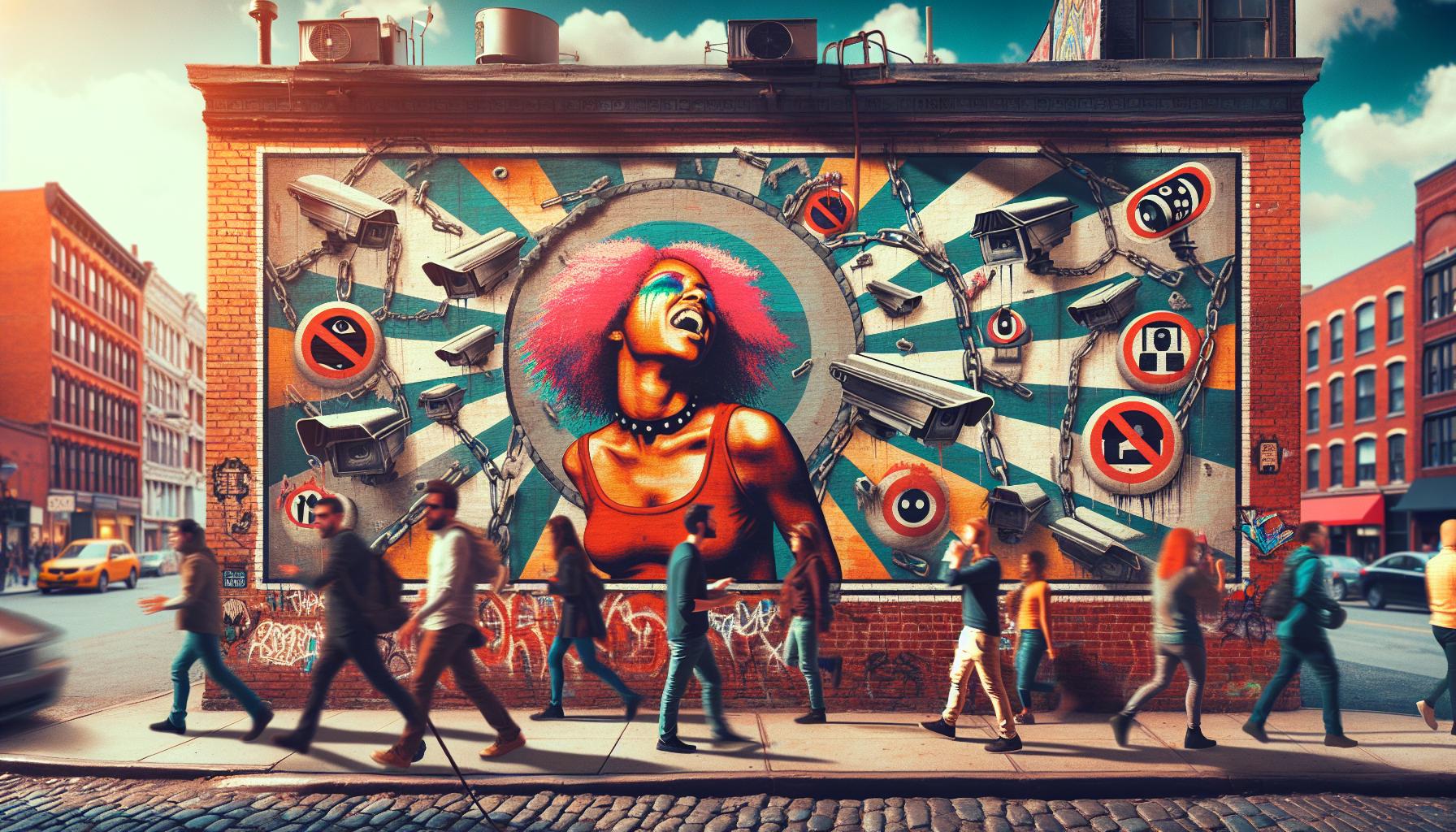
  • Surveillance cameras crossed out to protest state monitoring
  • Black and gold color combinations reflecting anarcho-capitalist philosophy
  • Corporate logos transformed into satirical commentary
  • Empty suits representing faceless bureaucracy
  • Doves paired with anti-war messaging
  • Raised fists indicating resistance to authority

Typography and Style

The typographic elements in libertarian street art combine bold visual impact with political messaging:

  • Stenciled letters creating sharp contrast for maximum visibility
  • Hand-drawn typography emphasizing personal expression
  • Block letters incorporating anarchist symbolism
  • Wheat-paste posters featuring manifesto-style text
  • Mixed media approaches combining spray paint with digital elements
  • Minimalist designs focusing on single powerful phrases
  • Geometric patterns integrated with political slogans
  • High-contrast color schemes enhancing readability from distance

Each visual technique serves to amplify the libertarian message while maintaining artistic integrity within the street art medium.

Notable Urban Spaces and Locations

Libertarian street art transforms urban landscapes into powerful platforms for expressing political dissent and individual freedom. These installations appear strategically in locations chosen for maximum visibility and symbolic impact.

City Walls and Public Places

Urban walls serve as primary canvases for libertarian street art expressions across metropolitan areas. Artists target specific locations such as financial districts (Wall Street, London’s Square Mile), abandoned buildings, and public transportation hubs to maximize message exposure. Key installation spots include:

  • Underground passages connecting major transit stations
  • Highway underpasses in densely populated areas
  • Commercial district barriers and construction sites
  • Public park perimeters adjacent to business centers
  • Warehouse districts in transitional neighborhoods

Government Buildings as Canvas

Government structures attract libertarian street artists due to their symbolic representation of authority and control. These installations appear on:

  • Municipal building exteriors
  • Courthouse perimeter walls
  • Legislative assembly barriers
  • Police station surroundings
  • Federal office complex fencing

The proximity to symbols of state power amplifies the anti-authoritarian message inherent in libertarian street art. Artists select these locations to directly challenge institutional authority while ensuring high visibility for their political commentary. Strategic placement near security cameras or official signage creates an intentional juxtaposition between state control and artistic resistance.

Impact on Political Discourse

Libertarian street art transforms urban spaces into catalysts for political dialogue, challenging established power structures through visual activism. This artistic medium amplifies marginalized voices while promoting discussions about individual liberty and state authority.

Public Reception and Controversy

Public response to libertarian street art divides along ideological lines, generating both support and opposition. Property owners often view these installations as vandalism, while free speech advocates celebrate them as democratic expression. The controversy extends to social media platforms where images of libertarian street art reach millions of viewers, sparking debates about:

  • Removal campaigns by local authorities target libertarian street art in financial districts
  • Documentation projects preserve controversial pieces through digital archives
  • Legal battles emerge between artists claiming free speech rights and property owners
  • Community groups organize to protect significant works from erasure
  • Social media amplification creates viral moments for powerful anti-state messages

The polarizing nature of libertarian street art generates media coverage that extends beyond local communities. Notable examples include:

Location Impact Engagement
New York 2.3M social shares 156 news articles
London 1.8M views 89 media mentions
Berlin 950K interactions 67 press features

These installations provoke discussions about property rights, civil liberties and government overreach. Local authorities face increasing pressure to balance preservation of politically significant artwork against enforcement of anti-graffiti ordinances. The resulting discourse shapes policy debates about public space usage and artistic expression in urban environments.

Artistic Freedom vs Property Rights

Libertarian street art presents a complex dichotomy between artistic expression and property rights protection. Private property ownership creates distinct boundaries for artistic endeavors, limiting the canvas options for street artists in a libertarian framework.

The relationship between graffiti and property ownership manifests in three key aspects:

  1. Government Property Usage
  • Artists target public infrastructure due to minimal maintenance
  • Lack of individual ownership reduces accountability
  • Government spaces experience higher rates of artistic interventions
  1. Private Property Protection
  • Owners maintain vigilant upkeep of surfaces
  • Quick removal of unauthorized artwork
  • Enhanced security measures against modifications
Property Type Graffiti Prevalence Maintenance Response
Government 77% of cases Delayed or minimal
Private 23% of cases Immediate action
  1. Economic Incentives
  • Private ownership encourages property preservation
  • Market-driven solutions for artistic display
  • Commercial venues emerge for legal expression

The privatization of public spaces transforms the landscape for street artists by:

  • Creating designated art zones
  • Establishing commercial opportunities
  • Developing legal exhibition spaces
  • Shifting focus to commissioned works
  • Promoting collaborative projects

Street artists adapt to private property constraints through:

  • Negotiating with property owners
  • Seeking authorized venues
  • Participating in sanctioned events
  • Creating portable installations
  • Developing alternative display methods

The tension between artistic freedom and property rights leads to innovative solutions as artists explore legitimate channels for expression while respecting ownership boundaries.

Conclusion

Libertarian street art stands as a powerful testament to creative resistance and political expression in our modern urban landscape. We’ve witnessed how this artistic movement challenges authority while advocating for individual freedoms through visually striking installations across global cities.

The delicate balance between artistic expression and property rights continues to shape this evolving art form. As we move forward the impact of libertarian street art on political discourse remains undeniable proving that visual protest can indeed spark meaningful societal change.

This dynamic form of activism reminds us that the walls of our cities aren’t just barriers – they’re canvases for revolutionary ideas and catalysts for important conversations about liberty authority and social change.

 

Where to Get Weird Stock Photos

Many brands and businesses skip the odd, human-centric stock images and incorporate weird stock photos to their social media, website, and blod posts to increase engagement and shareability. These weird stock photos feature landscapes, flatlays, and minimalist patterns that many people want to see these days. They can look terrifying or just bizarre.

Weird stock photography takes many forms. They can be an image of a woman wearing a pointed hat or a pretty girl with face paint. They can also be funny, such as the picture of a young boy wearing a DIY clown costume. (Read more here)

Now, several stock photography sites offer weird stock photos for your content development and design. They include weird images, hilarious pictures, and awkward poses in their collection. Unsplash, Little Visuals, and Pexels are known for this kind of images.  one of the best sources of high-quality weird stock images is Photocase, an incredible stock agency from Berlin.

Photocase may have a small collection of stock photos, but all represent an original concept. They have 500,000 stock images in the library, over 100 of which are premium stockphoto with a quirkiness in them. The image of a little boy dressed as Pennywise is both cute and terrifying. There is also a weird vampire portrait. The depth of their collection is not a trick, but a treat for creators and businesses.

Your choice of weapon can help extinguish the dullness of your content. Photocase offers two ways for you to purchase weird stock photos: Direct Purchase and Credit Bundle.

  • DIRECT PURCHASE
    Direct Purchase is a short and painless purchasing option. It is ideal for single purchases and occasional content requirements. You can buy the image your desire through credit card, bank transfer, or PayPal.
  • CREDIT BUNDLE
    Credit Bundle is a cheap and convenient purchasing method. It is the best option for brands with large and frequent image needs. You can enjoy attractive discounts of credit packages, so you can download as many stock images you need.

Both Direct Purchase and Credit Bundle come with a Base License that allows you to use an image indefinitely for any number of different projects around the world. You can also use the photos on social media sites, such as Facebook, Twitter, Instagram, etc. at no extra cost.

Other sources of weird stock photos
Other stock photography agencies that offer weird stock images include Stock Photo Secrets Shop, Adobe Stock, iStock, and Shutterstock. They have hundreds to thousands of funny, scary, and bizarre photos to fit the theme. The portrait of a young girl with creative skull makeup in SPS Shop is a sight to see. You can explore their libraries to find interesting stock imagery that suits your creative needs.

Photos of people wearing business suits and sitting in an office are a cliche. They can appear as vague and insincere, which makes it difficult for your audience to connect with your brand. Weird stock photos, on the other hand, may have zero sense but are commercially successful. They are especially visually-appealing and mind-boggling.

3 Awesome Places to Download Cheap Stock Photos for Website

Just because images are presented at a website does not mean they are available to use. Keep in mind that the photographer of the images have all the rights. If you use the photos for commercial or personal use without permission, you may get in trouble. Great thanks to stock photo agencies, you can acquire the rights to use cheap stock photos for the website without worrying about copyright issues down the road. View agencies here.

While there are a number of great sources for cheap stock photos, you need to consider your creative needs and budget. Determine these factors and you will not regret choosing the stock agency you have selected. Meanwhile, to help you with your search for a primary image source, we listed 3 awesome places to download cheap stock photos for website:

99 Club
Backed by industry experts, 99 Club is the best fit for people with large creative needs at a low budget. It has over 4 million high resolution, royalty-free images in the library, with 80,000 more added every month. You can download 200 XXL images per year, and get additional images for as low as $0.99 each. For a one-time fee of $99, you get a full one-year membership and download 200 images without daily limit.

What we like about 99 Club:

  • Stress-free access
  • Manual or auto-renew membership
  • Stunning images

Shutterstock
Catering to the creative community since 2003, Shutterstock has established itself as one of the top cheap stock photo sites in the market. It features a whopping 170 million image gallery, with thousands more added daily. Images on demand, subscriptions or team plans – whatever you are looking for – you can find it here. Plus, you can choose the right license for your creative needs.

What we like about Shutterstock:

  • Simple pricing
  • Free photos and vectors
  • Shutterstock coupon

Adobe Stock
Acquiring Fotolia a few years ago, Adobe Stock has continued the stock sites goal of providing creative professionals with cheap stock photos for website, blogs and more. It features the most inspiring images from select contributors, as well as 4K videos and a premium collection. If you are new to the stock site, you can start now and get 10 free images to jumpstart your next project.

What we like about Fotolia:

  • Integration with Creative Cloud desktop apps
  • Plans and pricing that meets your needs
  • HD and 4K videos available

These three cheap stock photo sites have three things in common – stunning content, straightforward pricing and easy user interface. You will surely find the perfect image for your next project easily and fast. If you are still looking for your primary image source, be sure to check out 99 Club by Stock Photo Secrets, Shutterstock and Adobe Stock. Whichever you choose, we assure you are in good hands.

What are you waiting for? Visit these stock sites and don’t forget to get a coupon code from Stock Photo Secret for more savings!

Get Cheap Stock Photos for Commercial Use + More Discounts

Advertising your products and services require more than just persuasive text. You also need to find the right stock photos that match your theme and style. They should also complement your message – make it more powerful. Keep in mind that people are visual creatures. They like pictures, both still and moving. By adding a great image, you can capture their attention and convey the right message.

Are you looking for great deals on stock photos for your creative project? Save your time and spend it on making your product more amazing because we got you covered. We created a list of stock photo agencies, where you can get cheap stock photos for commercial use (plus more!)

  1. 99 Club. The cheap stock photo site has an offer specially made for smaller companies. For only $99, you can download 200 images of up to XXL size per year. All images come with a royalty-free license, meaning you can use them in any project for as long as you like. The library is filled with millions of high resolution images. Over 80,000 more are added every month, too. Stock Photo Secrets currently offers a $0.49 per image promo – which we say is a very solid deal.
  2. With over 160 million high quality images in the library, you will surely find the photo that suits your theme and style. Although it does not offer the cheapest pricing and plan in the market, Shutterstock does give you the best value for your money. Offering images for as low as 28¢ each, it is definitely a good place to find cheap stock photos. To make things even greater, Stock Photo Secrets offers an exclusive 10% discount with its coupon code.
  3. With the stock photo agency, finding cheap stock photos is not a dream – It’s real! You can download images for as low as 20¢ each. You can browse their gallery for free. All you need to do is sign up. Dreamstime also boasts a flexible buying system. Once you register, you can start browsing through millions of high quality images.

  4. One royalty-free photo in Fotolia will only cost you 14¢. You can check out their gallery of awesome images (It’s free!). The Microsoft add-on and the Fotolia Desktop make the subscription even greater. Stock Photo Secrets also currently offers an exclusive deal. You can get 3 free credits + 20% discount when you sign up to the stock site. So, don’t forget to get their Fotolia promo code.
  5. The lowest price per photo is at 10¢ each. If you have a low budget but don’t want to compromise quality, you have come to the right place. Depositphotos is currently running a 7-day free trial that allows you to download up to 35 images. If you decide you like the stock site, you can choose a plan that will let you download images for as low as 10¢ per photo. To help you save more, Stock Photo Secrets offers an exclusive deal that gives you 5 free credits + 15% discount when you register to the stock site.

These 5 cheap stock photo websites some of the lowest prices in the market. But, the best thing is you can further your savings – thanks to Stock Photo Secrets.

Where to Buy Cheap Stock Photos for Small Business

Running a small business requires cheap stock photos to build your presence. We are visual creatures. Your target audience want pictures to go along with text, so they can understand your message better. Cheap stock photos for small business are not only worth a thousand words. Sometimes, they tell stories that no words could tell.

Your blog posts, social media posts, your website and your marketing materials all need images. As a small business owner, you need to set aside a budget for that. Although there other stock photos that cost higher than the others, you don’t have to resort to them for high quality. Many cheap stock photo sites offer high quality images for a much lower price.

Here are a few them:

  • You can get one photo for as low as 28 cents from Shutterstock. All you have to do is sign up to the stock site and get access to their weekly free photos and bonuses. The website has millions of premium royalty-free images in the library. You will surely find what you are looking for complete to creative projects.
  • Another great cheap stock photo website is Dreamstime. It offers a single image for as low as 20 cents. It also features free photo gallery that you can explore when you sign up to the website. Furthermore, it boasts a flexible buying system that will get you one photo for only 20 cents easily.
  • Combine a free gallery and very low price, you have the perfect image source in Fotolia. The stock photo site offers images for as low as 14 cents per image. Add Microsoft and Fotolia desktop, and you have the perfect tool to complete your creative projects.
  • If you are looking for the lowest price per photo, you have come to the right place. Depositphotos offer images for as low as 10 cents each. The stock currently runs a free trial for all new members, allowing you to download as many as 35 images in one week. After the trial, you can choose the plan that suits your creative needs and budget.
  • The cheapest single stock photo pricing is offered by PhotoSpin at 1 cent per image. That’s right! You can end up paying for as low as 1 cent for a single photo. The image library has over 2.5 million images. Run by designers, photographers and web specialists, the stock photo site truly understands what every creative needs.

If you are looking for a place to buy cheap stock photos for small business, you will find this list helpful. Whatever your budget is, you will surely find a plan that suits it here. All stock sites mentioned feature an amazing library filled with royalty free images. Remember, just because you don’t have a huge budget does not mean you should compromise quality. A number of cheap stock photo agencies are available on the Internet, and we list them here for your own convenience. Sign up to one of them and jumpstart your projects now!